Machinery
Unusual dimensions, loading method, and crane or forklift coordination can change the work behind the move.
Flatbed Dispatch Services
Flatbed freight is not just about finding the highest posted rate. Commodity, dimensions, deck space, tarping, loading method, permits, driver work, deadhead, partial opportunities, and the next reload can completely change what a trip is worth.
Skyline Freights helps owner-operators and small fleets build better Flatbed trips—from load search and rate negotiation to permit coordination, compatible partials, accessorials, paperwork, and reload planning.
Build the Complete Move
We Price the Work — Not Just the Miles.
A Flatbed dispatcher should evaluate more than origin, destination, and posted RPM. Skyline reviews the information available about the freight and the work before presenting the option.
Two 500-mile Flatbed loads can have completely different economics. Forklift-on, forklift-off, no-tarp freight is not the same move as machinery, a full-tarp jobsite delivery, coils with disclosed equipment requirements, or permitted freight.
See how this fits Skyline's broader dispatch services.
Commodity Intelligence
Skyline works to understand the disclosed requirements before negotiating the move.
Unusual dimensions, loading method, and crane or forklift coordination can change the work behind the move.
Tarping, weather exposure, jobsite conditions, and unloading method can shape the trip.
Different freight can involve different disclosed equipment, loading, routing, and handling requirements.
Some legal-dimension, no-tarp freight can be more straightforward when the load details fit the truck.
Skyline can clarify and document information supplied by brokers, shippers, and customers. The carrier and driver remain responsible for inspecting the freight, confirming equipment suitability, selecting and applying proper securement, meeting legal requirements, and operating safely.
Pre-Booking Load Review
Skyline works to clarify available broker and shipper information before the truck commits.
Better information before booking means better decisions before the truck moves.
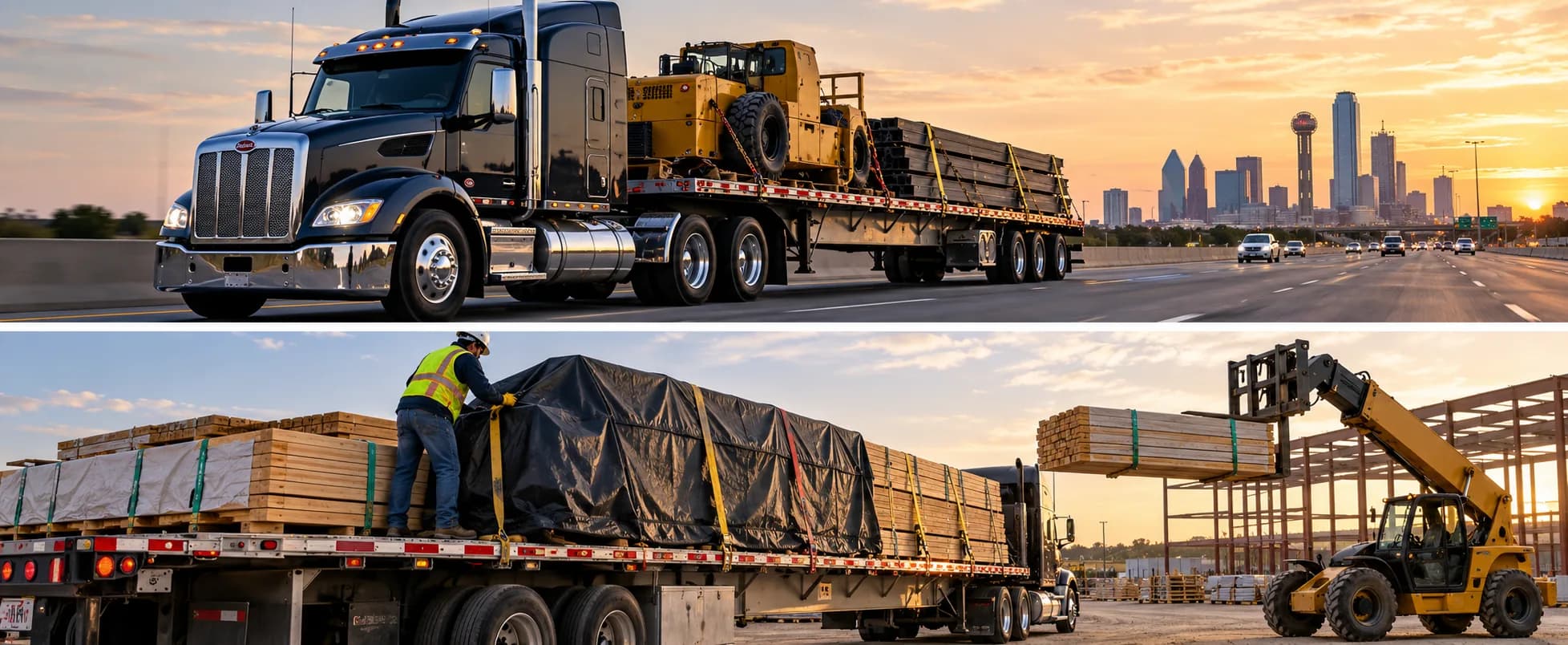
Permitted Flatbed Freight
Permitted Flatbed freight should not be negotiated like ordinary standard-dimension freight.
For suitable Flatbed moves requiring permits, Skyline can help coordinate the permit process for the specific move and factor the additional cost, planning, route requirements, restrictions, and work into broker negotiation.
Permit requirements depend on the specific dimensions, weight, route, and jurisdictions. The carrier remains responsible for legal compliance, equipment suitability, and safe operation.
Partial-Load Strategy
When the primary load leaves usable deck space and weight, dimensions, routing, appointments, freight compatibility, and carrier preference permit it, Skyline can search for compatible partial freight.
Primary Load
$2,000
Compatible Partial
$1,250
Combined Gross
$3,250
Actual Trip Miles
500
$3,250 ÷ 500 = $6.50 per trip mile
If the partial adds mileage, calculate combined RPM using the actual total trip miles. Do not simply add advertised RPM figures.
Use the Capacity. Build the Trip. Increase the Revenue Opportunity.
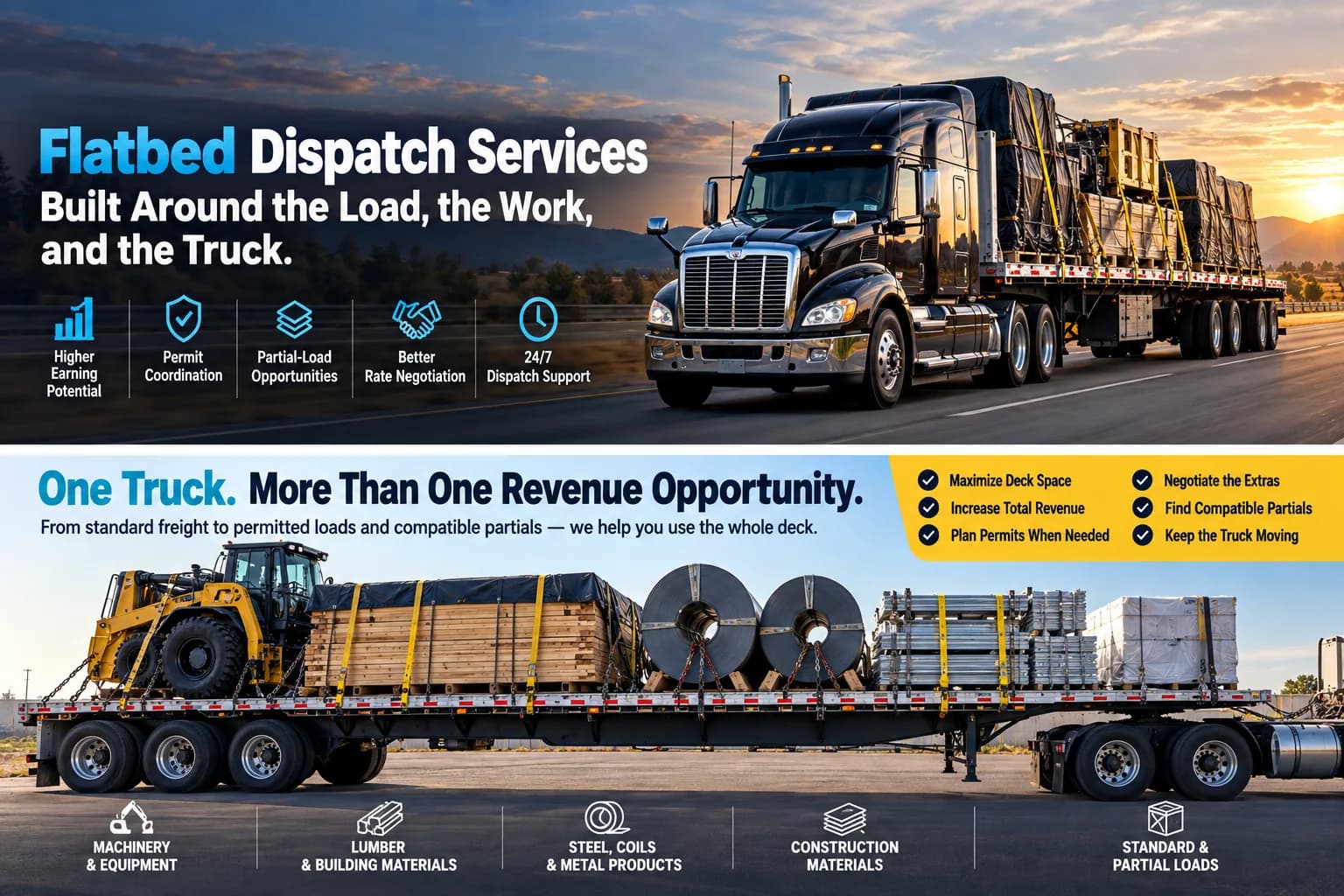
Capacity With Discipline
More freight does not automatically mean more profit.
The objective is higher trip revenue—not simply more freight on the trailer.
Complete-Trip Negotiation
Skyline evaluates the complete move, not just linehaul.
Know the Freight. Know the Work. Know the Market. Then Negotiate the Rate.
Flatbed
Dallas, TX Kansas City, MO
$2,300
Destination & Reload Planning
While the truck is still moving, Skyline can evaluate the destination market, potential reloads, compatible partial opportunities, appointment timing, deadhead, and the carrier's preferred next move.
We Plan the Week — Not Just the Load.
Find open-deck freight around the truck, equipment, location, lanes, schedule, authority, and preferences.
Negotiate the complete move instead of automatically accepting the posted linehaul.
Clarify available commodity, dimensions, weight, loading, protection, facility, and appointment information.
Search for compatible partials when usable capacity, route, timing, and carrier preferences support it.
Help coordinate the permit process for suitable moves and include disclosed permit-related work in negotiation.
Work applicable tarp pay, detention, layover, TONU, driver assist, extra-stop, and related terms.
Coordinate applicable packets, calls, emails, updates, and load communication.
Organize rate confirmations, BOLs, PODs, receipts, and dispatch-side load documents.
Evaluate the destination and work ahead on what can move the truck next.
Keep active dispatch communication available around the operation.
01
Share equipment, usable deck, lanes, schedule, home time, freight preferences, and operating requirements.
02
Skyline looks for standard freight, permitted opportunities, and compatible partials that fit the operation.
03
Review the available freight, dimensions, loading method, tarping, disclosed equipment, schedule, route, and destination.
04
Negotiate the rate and applicable extras, then present the load for carrier approval.
05
Handle dispatch communication, paperwork, applicable accessorial follow-up, and proactive reload planning.
No forced dispatch. Carrier approves the load.
Straightforward Support
Semi Truck Standard
Load search, rate negotiation, broker setup, paperwork, load-detail review, lane planning, reload planning, and dispatch support.
Semi Truck Premium
Higher-touch dispatch and operational support for carriers wanting more active trip planning and coordination.
New Authority Flatbed Dispatch
Newer authorities can face additional broker restrictions while they build operating history. Skyline can work around the brokers currently available to your authority while helping coordinate broker setups, load search, rate negotiation, paperwork, and the next move.
Skyline Flatbed Support
Work ahead on reloads and next moves when timing and market conditions support it.
Keep searching the market for opportunities that fit the truck and operating plan.
Negotiate the complete trip, disclosed work, and applicable extras.
Think beyond one load and plan how freight can connect across the week.
Work active broker relationships alongside established freight-search channels.
Use available direct freight sources as part of the broader market search.
Work with someone who learns the equipment, lanes, and operating preferences.
Keep dispatch communication available around active operations.
Flatbed Dispatch Questions
A Flatbed dispatcher searches for open-deck freight, reviews available load details, negotiates rates and applicable extras, communicates with brokers, coordinates dispatch paperwork, and plans reload opportunities.
Semi Truck Standard is 5% of weekly gross and Semi Truck Premium is 7%.
No. The carrier approves every load before it is booked.
Yes. When usable capacity, routing, appointments, freight compatibility, and carrier preferences support it, Skyline can search for compatible partial freight.
They can be considered when deck space, capacity, route, timing, loading requirements, freight compatibility, and the primary shipment all support the combination.
Combined gross should be divided by the actual total trip miles, including added mileage required by the partial. Advertised RPM figures should not simply be added together.
For suitable moves requiring permits, Skyline can help coordinate the permit process using the specific dimensions, weight, route, and jurisdiction information available for the load.
Yes. Disclosed permit costs, route requirements, restrictions, planning, and added work should be considered when negotiating a permitted move.
When tarping is required and the terms are applicable, Skyline can include that disclosed work in broker negotiation.
Skyline can negotiate applicable terms and help organize broker communication and supporting documentation for these issues.
Skyline works to clarify the available broker or shipper information before commitment so the carrier can make an informed decision.
Yes. Applicable broker setup, rate confirmations, BOL and POD support, and dispatch-side paperwork are included.
When timing and market conditions allow, Skyline evaluates the destination and starts working on potential reloads before the truck is empty.
Yes. Preferred lanes, home time, freight preferences, and other operating requirements are part of the dispatch plan.
Yes. Broker eligibility varies, but Skyline can work available opportunities and coordinate applicable setups.
Explore New Authority Dispatch SupportThe carrier and driver remain responsible for inspecting the freight, confirming equipment suitability, selecting and applying proper securement, meeting legal requirements, and operating safely. Skyline can clarify and document information supplied by brokers, shippers, and customers but does not determine or perform securement.
Complete the carrier lead form or call a Skyline dispatcher to discuss the truck, authority, lanes, schedule, and operating preferences.
Use the Deck. Price the Work. Plan the Next Move.
Use the deck intelligently. Understand the work before booking. Price permitted freight correctly. Negotiate the extras. Add compatible partials when the economics make sense. Plan the reload before delivery. And keep the truck moving.